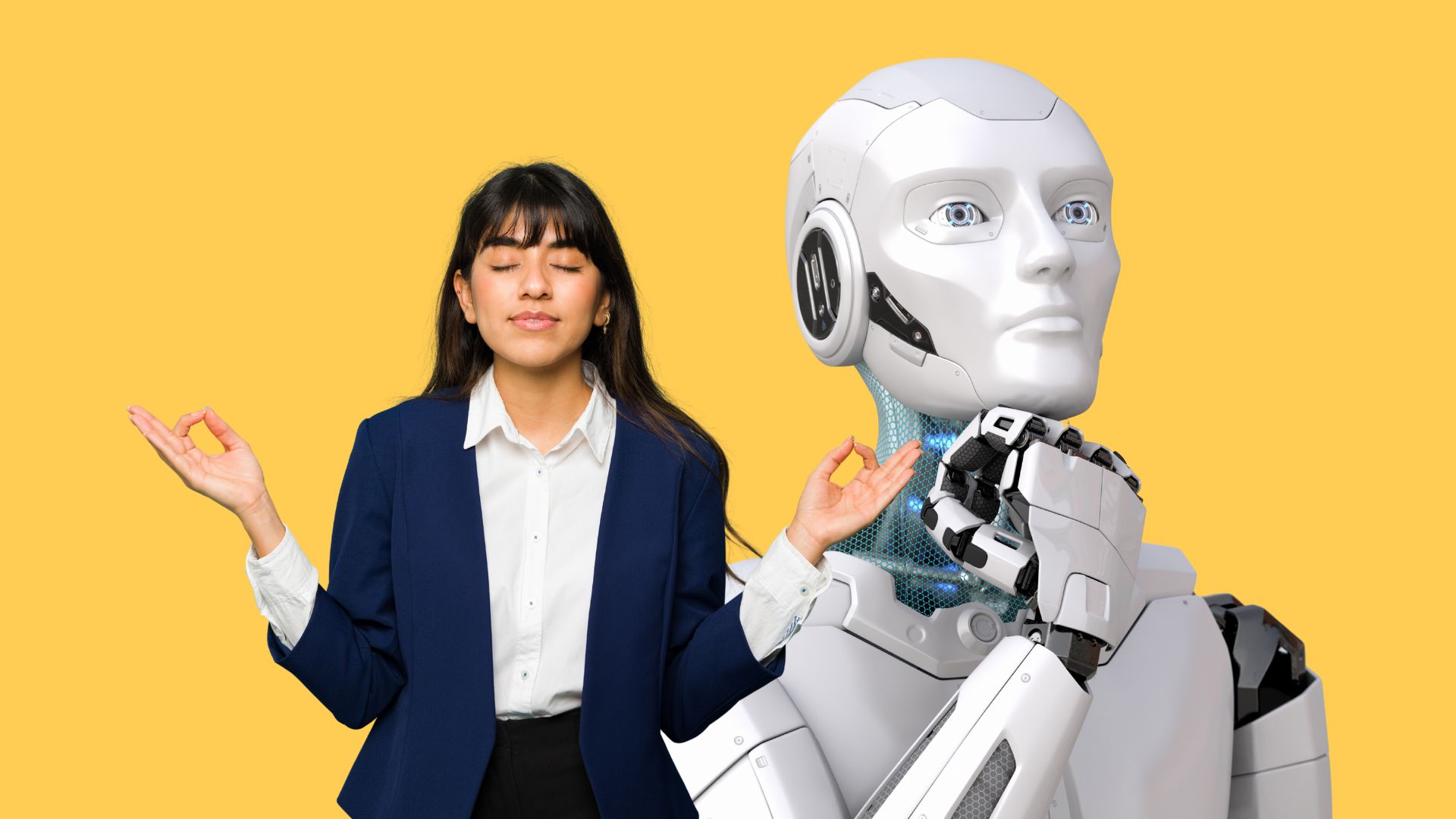
Elevating Emotional Intelligence as AI Levels the IQ Playing Field
Discover why emotional intelligence matters more than ever in the age of AI. This blog explores timeless stories, research, and leadership insights to show how EQ drives resilience, happiness, and success. Learn practical ways to strengthen your emotional skills for work and life.
In Search Inside Yourself, former Google engineer Chade-Meng Tan writes that emotional intelligence (EI) is the hidden engine behind exceptional performance, inspiring leadership, and lasting happiness at work. As artificial intelligence (AI) levels the playing field on raw intelligence quotient (IQ), EI will increasingly determine how we shape our lives – and how fulfilled we feel in a world that never stops accelerating.
These reflections take me back to a story my professor shared on the convocation day, that perfectly captures how elevating EI can amplify joy and guide us through life’s twists and turns.
The Story of Bholu and Molu
Once upon a time, in a small village, there were two washermen. Each had a donkey – one named Bholu and the other named Molu. The washermen and their donkeys were a familiar sight in the peaceful village.
Bholu’s master was a diligent man. He was always seen working tirelessly and serving his customers with warmth. Every garment he washed came back looking as good as new, delivered on time with a smile. The villagers liked his reliability and service quality. He also took good care of Bholu, however Bholu looked always sad and dull.
Molu’s master, in contrast, lacked the dedication and professionalism. His services were erratic. Molu frequently bore the brunt of his master’s negligence. As and when any annoyed customer visited them to complain about the poor quality of services, Molu’s master always asked him to face them and give (false) assurance that it will not be repeated next time. Molu washed these returned clothes himself, while his master preferred to sleep. Despite working endlessly without proper rest and meals, Molu looked always happy and full of energy.
Based on the hard work, and dependable quality service, Bholu’s master earned the loyalty of the entire village and prospered. In a few years, he saved enough to fulfill his dream of starting an automated laundry in the nearby town. Before leaving for the town, he ensured Bholu would live a comfortable life in the village, by giving his well furnished hut to him and also making weekly visits to provide all the required household essentials.
Both Bholu and Molu were friends, as there was no other donkeys in that village. Villagers also knew them by their names. Now Bholu had enough comfort without any work to do but he still felt always sad, blaming his fate. However he was always puzzled to see that despite working endlessly without proper rest and meals, how Molu was always smiling and looked very calm and happy. One day, unable to contain his curiosity, Bholu asked Molu: “Dear friend, how come you always so joyous? I live in comfort and ease, yet I feel trapped in sadness. You, despite facing hardships, keep smiling. What is your secret?”
Molu, initially hesitant, eventually confided in his friend. “Well,” he said, “my master’s young daughter absolutely despises school. He often threatens that he will marry her off to a donkey if she refuses to study. Given his poverty, I believe he will actually end up marrying me to his daughter, since he cannot afford a new donkey. That thought keeps me happy and hopeful!”
For a moment, Bholu was stunned into silence by the absurdity of Molu’s reason. Then the two donkeys burst into laughter together. Molu’s secret source of happiness was an improbable fantasy indeed – a wild hope that someday he might become part of the master’s family! As ridiculous as it was, that hope gave Molu something to look forward to each day, a reason to smile through his pains.
When my professor debriefed this story, he explained the important lesson hidden in Molu’s attitude. Though he used the characters of Bholu and Molu to dramatize his story and to convey his point especially to his young audiences, who had wavering attention. “Molu, the professor noted, possessed high emotional intelligence, allowing him to create happiness out of a bleak situation”. His reason for optimism (though far-fetched and unrealistic in this story) helped him to navigate his life’s challenges. On the other hand, Bholu’s comfort alone was not enough to make him happy, because he lacked that optimistic mindset and the power of elevated level of EI.
What is Emotional Intellignce?
Travis Bradberry & Jean Greaves in his book Emtional Intelligence 2.0 beautifully defines EI. They write “emotional intellgnce is your ability to recognise and understand emotions in yourself and others. And your ability to use this awareness to manage your behaviours and relationships. It affects how we manage behaviours, navigate social complexities and make personal decisions that achieve positive results”. They define four skills that together make up EI. The first two skills – SELF AWARENESS and SELF MANAGEMENT, are more about you. The other two skills, SOCIAL AWRENESS and RELATIONSHIP MANAGEMENT, are more about how you are with other people.
Daniel Goleman in his famous book Emotioanal Intelligence: Why it can matter more than IQ, quotes famous psychologists who define EQ similar to as mentioned above, but add one more ability – the ability to MOTIVATE oneself.
Leveraging Emotional Intelligence
Molu’s ability to remain motivated under adversity echoes a growing body of research on emotional intelligence. Psychologist Martin Seligman, known as the father of modern positive psychology, famously found that optimistic life insurance agents significantly outsold their pessimistic peers. In one study at MetLife, the most optimistic sales agents sold up to 37 percent more insurance in their first two years than average agents – and a stunning 88 percent more than the most pessimistic group. On similar lines, Daniel Goleman in his book Working with Emotional Intelligence, observed that for star performers in any field, emotional competence can be twice as important as pure intellect or technical skill. Optimism, a trait Molu displayed, doesn’t just make you happier – it can translate into tangible success. Seligman’s work suggests that seeing setbacks as temporary and maintaining hope can improve performance in the long run.
EI is a key ingredient in effective leadership as well. A Yale-led study of nearly 15,000 people in 2020 found that managers who acted in emotionally intelligent ways – who recognized and acknowledged their employees’ feelings, helped them channel emotions constructively, and managed their own emotions – fostered dramatically happier and more creative teams. Employees under these emotionally intelligent bosses reported being happy at work three times more often than they felt stressed. They also perceived more opportunities for growth and were more willing to innovate and contribute new ideas. By contrast, employees with low-EI supervisors most frequently described feeling frustrated, underappreciated, or angry. This study, led by researcher Zorana Ivcevic at the Yale Center for Emotional Intelligence highlights – how emotional intelligence in leadership creates a positive climate where people thrive.
EI and resilience go hand in hand. EI helps us making us more resilient, and resilience further reinforces our emotional well-being.Psychological studies find that people with high EI tend to be more resilient and better at coping with adversity. By being aware of their emotions but not overwhelmed by them, they can adapt their thinking and behavior during stressful times. In one recent study, researchers noted that individuals with higher EI had greater life satisfaction and optimism, which helped them withstand stress better, and in turn those who were resilient experienced fewer negative emotions (Rao et al., 2024).
Last but not the least, happiness itself is strongly tied to emotional intelligence. A study published in Journal of Intelligence in 2023, found a significant positive link between adolescents’ emotional intelligence and their subjective happiness – teens with stronger emotional ability skills tended to consider themselves happier in life. Not only that, but they also experienced more positive emotions and fewer negative ones on average. While that study focused on younger people, its implication is universal: by improving our ability to understand and manage emotions, we can boost our overall well-being.
Conclusion
Indeed, the tale of Bholu and Molu is a fictional one, but it carries a powerful and timeless message: when we intentionally build emotional intelligence: self-awareness, self-management, social awareness, relationship management and ablity to motivate onself even in unfavourable circumstances – we become more positive, productive, resilient, deciplined and build strong problem solving and leadership skills.
Because our brains are wired to make us emotional creatures, our first reaction will often be emotional than rational. This is a feature and a potential bug. Recognizing this design helps us to use our emotions well as a feature – to pause, to persist in the face of frustrations, to choose our response well, and to empathise than getting our thinking brain hijaked by emotional explosions – the bug. Even when we need to push back or reprimand others, we can do so with grace. As Aristotle once said – anyone can become angry – that is easy. But to be angry with the right person, to the right degree, at the right time, for the right purpose and in the right way – that is not easy.
In a world where AI is rapidly leveling the IQ playing field, this choice of being emotionally intelligent is what will keep us relevant, effective, deeply human and most important, happy like Molu 🙂
References:
- Goleman, D. (1998). Working with Emotional Intelligence. New York: Bantam Books.
- Ivcevic, Z., Moeller, J., Menges, J. I., & Brackett, M. A. (2021). Supervisor emotionally intelligent behavior and employee creativity. The Journal of Creative Behavior, 55(1), 79–91. https://doi.org/10.1002/jocb.436
- Llamas-Díaz, D., Cabello, R., Gómez-Leal, R., Gutiérrez-Cobo, M. J., Megías-Robles, A., & Fernández-Berrocal, P. (2023). Ability emotional intelligence and subjective happiness in adolescents: The role of positive and negative affect. Journal of Intelligence, 11(8), 166. https://doi.org/10.3390/jintelligence11080166
- Rao, G. P., Koneru, A., Nebhineni, N., & Mishra, K. K. (2024). Developing resilience and harnessing emotional intelligence. Indian Journal of Psychiatry, 66(Suppl 2), S255–S261. https://doi.org/10.4103/indianjpsychiatry.indianjpsychiatry_601_23
- Seligman, M. E. P., & Schulman, P. (1986). Explanatory style as a predictor of productivity and quitting among life insurance agents. Journal of Personality and Social Psychology, 50(4), 832–838.
- Tan, C. M. (2012). Search Inside Yourself: The Unexpected Path to Achieving Success, Happiness (and World Peace). New York: HarperOne.
- Llamas-Díaz, D., Cabello, R., Gómez-Leal, R., Gutiérrez-Cobo, M. J., Megías-Robles, A., & Fernández-Berrocal, P. (2023). Ability emotional intelligence and subjective happiness in adolescents: The role of positive and negative affect.Journal of Intelligence, 11(8), 166.
- Travis Bradberry & Jean Greaves (2009). Emotional Intelligence 2.0. San Diego: Talent Smart
- Daniel Goleman (1996). Emotionbal Intelligence: Why it can matter more than IQ. London: Bloomsbury Publishing Plc
- Chade-Meng Tan (2012). Search Inside Yourself: Increase Productivity, Creativity and Happiness. UK:HarperCollins.
By
Pranav Kumar Choudhary | COO
Read More

Mangrove Wetlands Restoration: A Field Experience from Tadatalav

The Evolution of Indian Sign Language: From Policy to Participation