Malnutrition in India: A Gender Based Outlook
Malnutrition in India is more than a health challenge, it is a reflection of deep-rooted social, cultural, and gender inequalities. This blog explores how women and girls disproportionately bear the burden, the intergenerational cycle it creates, and why empowering women is central to breaking free from it.
Malnutrition – A Persistent and Complex Problem
Malnutrition in India remains one of the most persistent and multifaceted public health challenges. A revealing example of its complexity comes from the pioneering work of Dr. Lucy Wills, a British physician and haematologist, who began studying macrocytic anaemia in pregnancy in India in 1928. While working in Mumbai, she was struck by the fact that poor Muslim women, despite having similar economic status to others, were more likely to suffer from this condition. After extensive study, she concluded that the issue stemmed not from the quantity of food consumed, but from the quality and type of food. This led to the identification of a nutrient deficiency known at the time as the “Wills Factor”, later discovered to be folic acid, which is abundantly found in fermented foods and critical in preventing certain types of anaemia during pregnancy. (1, 2)
This story illustrates that malnutrition is not merely about food scarcity but about complex interactions of dietary patterns, cultural habits, and biological needs. Despite India’s rapid economic growth since the 1990s and expansive nutrition-related programs like the Integrated Child Development Scheme (ICDS), the country continues to struggle with malnutrition. India is home a high number of malnourished children as more than 50% children, under the age of 5, suffer from chronic malnutrition in India. Paradoxically, even as undernutrition remains rampant, about one-third of children from more affluent urban settings suffer from obesity. (3)
Socio-economic conditions, geographical disparities, cultural customs, sanitation, access to clean water, and maternal education levels all significantly impact an individual’s nutritional status. In this diverse mix, girls and children from marginalized caste groups tend to fare worse nutritionally compared to boys and children from higher castes. (4, 5, 6, 7) Similarly, children of mothers with higher education levels consistently show better nutritional outcomes, highlighting the critical role of awareness and knowledge in improving nutrition. (8)
Gender and Malnutrition
The issue of malnutrition in India cannot be separated from its gendered dimensions. According to the latest National Family Health Survey (NFHS-5), 57 percent of Indian wo ) the ages of 15 and 49 are anaemic, marking an increase from 53 percent in the NFHS-4 survey. Among adolescent girls aged 15 to 19, anaemia rates have climbed to 59.1 percent. (9, 10, 11). These statistics underscore the disproportionate burden of malnutrition borne by women and girls, who not only have greater physiological nutritional needs, especially during adolescence, pregnancy, and lactation, but also face structural barriers to accessing quality food and healthcare.
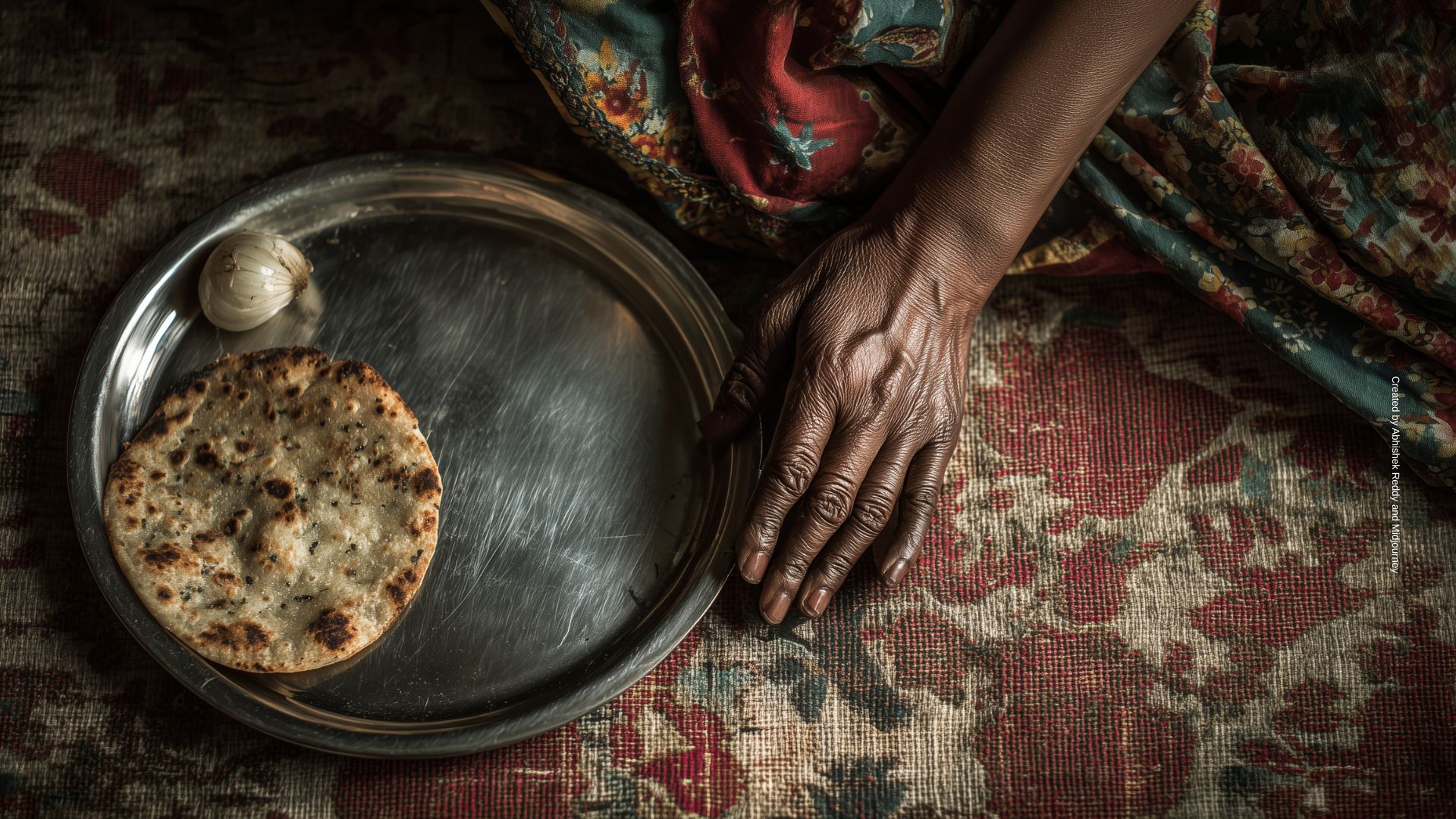
This gendered disparity is further deepened by societal roles and expectations. Long‐standing gender roles mean women often eat last and least. Studies document that in many Indian families “women often…serve men first and themselves last”. (12) For example, Coffey et al. report that in states like Bihar, Jharkhand and Maharashtra it is common for women to eat only after all men have finished. (13)Such norms have real costs: women who habitually eat last tend to have worse physical health and even poorer mental well‐being than those who eat earlier. (14) These practices correlate with lower nutrient intake for women and girls; they are often the first in a household to forego diverse or protein‐rich foods.
Malnourished women are more likely to give birth to undernourished infants, and if the infant is a girl, she may grow up to repeat this same cycle, perpetuating intergenerational malnutrition. The ability of women to break this cycle is severely limited by their lack of decision-making power in households, especially concerning food choices, health care, and allocation of resources. Despite being primarily responsible for preparing food and caring for children, many women are denied the education, resources, and autonomy required to make informed nutritional decisions for themselves and their families. (15)
A woman’s life journey – from adolescence through childbearing – crucially affects malnutrition. Early marriage and adolescent pregnancy remain common and are concentrated in specific vulnerable groups and regions in India and exacerbate nutritional risks. Girls who marry and bear children as teenagers enter pregnancy already malnourished. UNICEF notes that nearly half of child growth failure by age two is attributable to poor maternal nutrition during pregnancy. (16, 17, 18)
Interventions and the State’s Role
Experience from successful interventions around the world suggests that targeting the nutrition of adolescent girls, pregnant and lactating women, and children under two years of age yields the greatest long-term benefits. Simple yet high-impact practices such as initiating breastfeeding within one hour of birth, exclusive breastfeeding for the first six months, timely introduction of complementary foods, and maintaining safe feeding practices are critical. These need to be supported by routine immunization, deworming, adequate nutrition during illnesses, and focused care for children with severe acute malnutrition. Moreover, adolescent girls and mothers must receive timely and adequate nutritional support, especially iron and folic acid supplementation, to prevent anaemia and other micronutrient deficiencies.
The Indian government has instituted several programs to address malnutrition, structured around different demographic groups. ICDS, Indira Gandhi Matritva Sahyog Yojana (IGMSY), Reproductive and Child Health Program (RCH-II), and Janani Suraksha Yojana (JSY) targeted towards pregnant and lactating mothers. Children below six years are covered under ICDS and crèche schemes, etc. (19)
Challenges in Implementation
While these programs are comprehensive on paper, implementation challenges continue to hinder their success. The NFHS-5 survey reveals that only 41.8 percent of children were breastfed within one hour of birth. Although exclusive breastfeeding for the first six months has improved to 63.7 percent, from 54.9 percent in NFHS-4, this still leaves a significant gap. (20, 21, 22) Furthermore, only 11.3 percent of children aged between 6 to 23 months received a minimum acceptable diet, which points to severe deficits in complementary feeding practices. Vaccination coverage among children aged 12 to 23 months stands at 76.4 percent, while only 30.1 percent of children aged 6 to 59 months received deworming medication in the six months prior to the survey. (23) The utilization of Anganwadi Centres also remains low, with just 53 percent of women receiving any support during pregnancy and 49 percent during breastfeeding. (24)
These gaps indicate that while programmatic frameworks exist, the reach, awareness, and community engagement remain weak. Behavioural change, cultural perceptions, and lack of adequate training for frontline workers continue to impede full coverage and success of nutritional interventions.
Malnutrition and Women’s Empowerment
Ultimately, addressing malnutrition in India requires more than just food-based or health-centric solutions. It must be approached as a societal issue rooted in gender inequality and lack of education. Women must be seen as central actors in the fight against malnutrition, not just passive beneficiaries. Empowering women through education, improving their access to health and nutrition services, and enhancing their role in decision-making within the household and community are vital steps toward sustainable change.
When women are equipped with knowledge and autonomy, they are better able to choose nutritious foods, practice safe feeding, and seek timely medical help. This empowerment can ripple across generations, breaking the cycle of undernutrition, but in most cases malnutrition. As India moves forward in its development journey, prioritizing gender-sensitive approaches to nutrition will be key to achieving better health outcomes for the entire population.
Note: The data presented above are based on the NFHS-5 (2019–21) findings. For more detailed information, please refer to the official NFHS-5 reports and related publications.
By
Anu Liza Thomas | Deputy Manager – Sashakt
Read More

Mangrove Wetlands Restoration: A Field Experience from Tadatalav

The Evolution of Indian Sign Language: From Policy to Participation