Strengthening farms so rural households gain greater security and choice.
Our rural livelihoods work helps small and marginal farmers access practical knowledge, adopt improved practices and strengthen their incomes. The figures below capture the reach of these efforts alongside changes in crop yields and income per acre. They show how agricultural guidance delivered through trusted community networks can translate into tangible gains for farming households and make cultivation more rewarding.
reported yield
increase
farmers
reached
reported reduction
in cultivation costs
A rural household’s livelihood depends on more than the size of its farm. Timely knowledge, appropriate practices, reliable markets and additional sources of income can all influence what a family earns and how well it withstands a difficult season.
Dr. Reddy’s Foundation began working in rural livelihoods in 2013. In 2016, we launched MITRA to address the last-mile gap in agricultural extension through a farmer-led model.
Today, MITRA connects institutional research with knowledge from the field. It helps smallholder farmers adopt improved and sustainable agricultural practices, reduce cultivation costs, access markets and explore supplementary livelihood opportunities. By enabling farmers to learn from one another, the programme allows useful practices to travel further and remain within the community.
For a smallholder household, decisions about seed rate, sowing, soil health, crop management and markets can determine the return from an entire season. Yet access to technical knowledge, appropriate finance and reliable income opportunities remains uneven.
of agricultural households accessed technical advice during January to June 2019
of agricultural households held a valid Kisan Credit Card in 2021–22
of agricultural household income came from cultivation
These figures underline the importance of extending practical agricultural guidance, improving access to timely finance and supporting supplementary livelihoods to strengthen rural household incomes.
Sources:
MoSPI Situation Assessment Survey of Agricultural Households 2019, Report 587
NABARD All India Rural Financial Inclusion Survey 2021–22, published October 2024
01
Identify and train lead farmers who can demonstrate improved practices, answer questions and share learning within their communities.
02
Work with agricultural research institutions, government agencies and technical partners to take validated technologies and practices to farmers.
03
Use field demonstrations, village meetings, learning exchanges, community outreach and digital channels to help farmers understand and adopt relevant practices.
04
Support farmers across different stages, from sowing and crop management to post-harvest practices, market access and financial and digital literacy.
05
Introduce appropriate supplementary activities that can contribute to household income, nutrition and resilience.
MITRA is a farmer-led agricultural extension platform for smallholder farmers. At its centre is a network of lead farmers trained through local agricultural extension systems and partnerships with government agencies, research institutions and private-sector organisations.
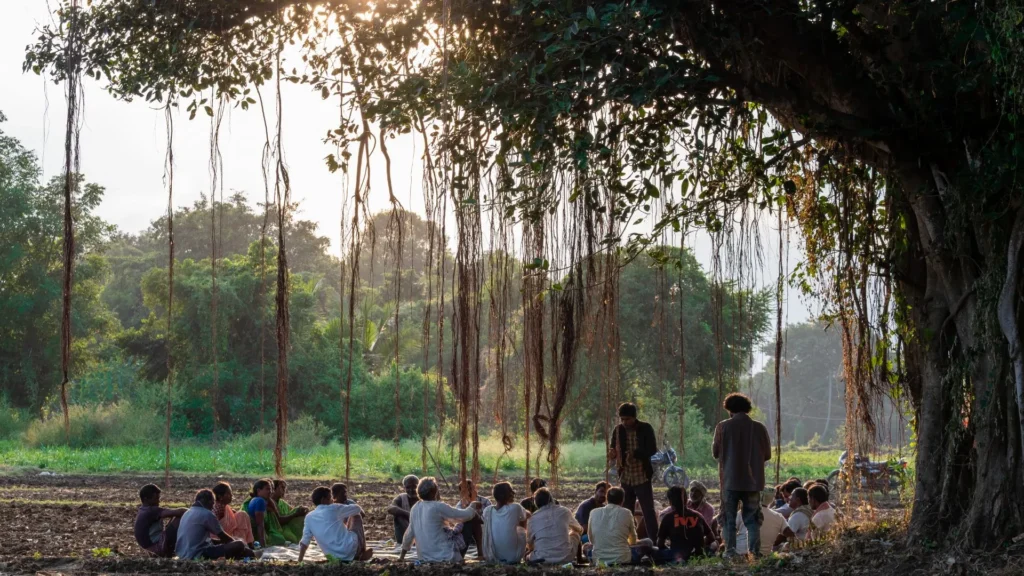
Lead farmers take this learning into their villages through practical demonstrations, peer discussions and continued guidance. Because advice comes from farmers working in similar conditions, communities can assess new practices in a familiar context before adopting them.
The programme supports improvements across the agricultural value chain. Farmers receive guidance on better seeding and agronomic practices, sustainable cultivation, input use, market linkages and digital and financial literacy. Community gatherings, field demonstrations and digital communication help useful knowledge move quickly across villages.
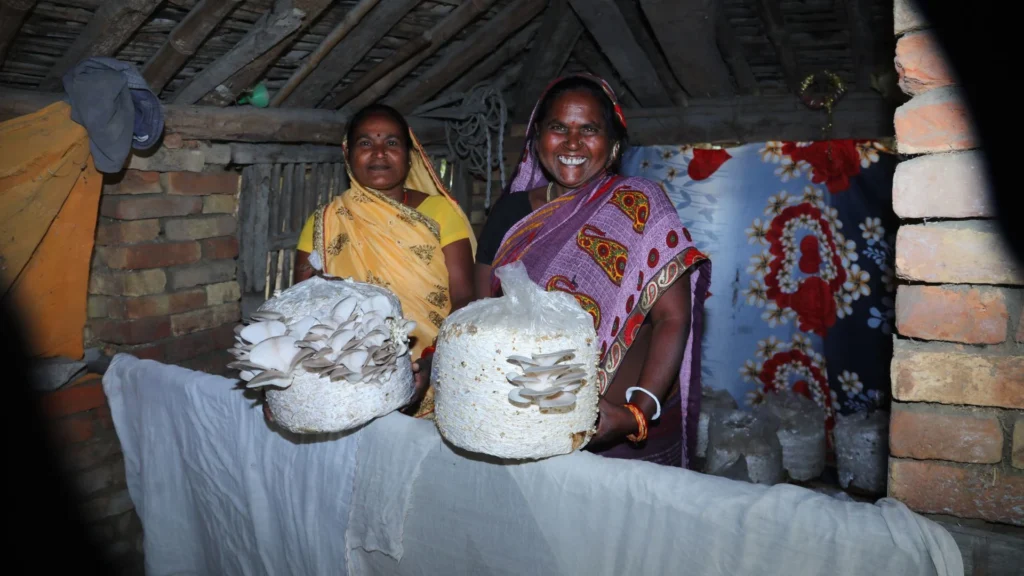
Participating farmers have reported yield improvements of 10–15% and reductions of 5–10% in cultivation costs, driven largely by better seeding and agronomic practices. Supplementary activities such as indoor mushroom cultivation also create additional opportunities for income and household nutrition.
Taking agricultural research further
Under its 2026 partnership with the Indian Council of Agricultural Research, DRF is using its established last-mile network to take ICAR-validated technologies and skills to farming communities across six states. The partnership brings institutional research and field implementation together to support the adoption of science-based regenerative agricultural practices at scale.

SDG 2: Zero Hunger by improving farm productivity, promoting sustainable practices and strengthening household food security

SDG 8: Decent Work and Economic Growth by helping farmers reduce cultivation costs, improve returns and develop supplementary sources of income.

SDG 13: Climate Action by encouraging regenerative and resource-efficient farming practices that strengthen resilience to climate-related risks.

SDG 17: Partnerships for the Goals through collaboration with agricultural research institutions, government agencies, technical organisations and private-sector partners.