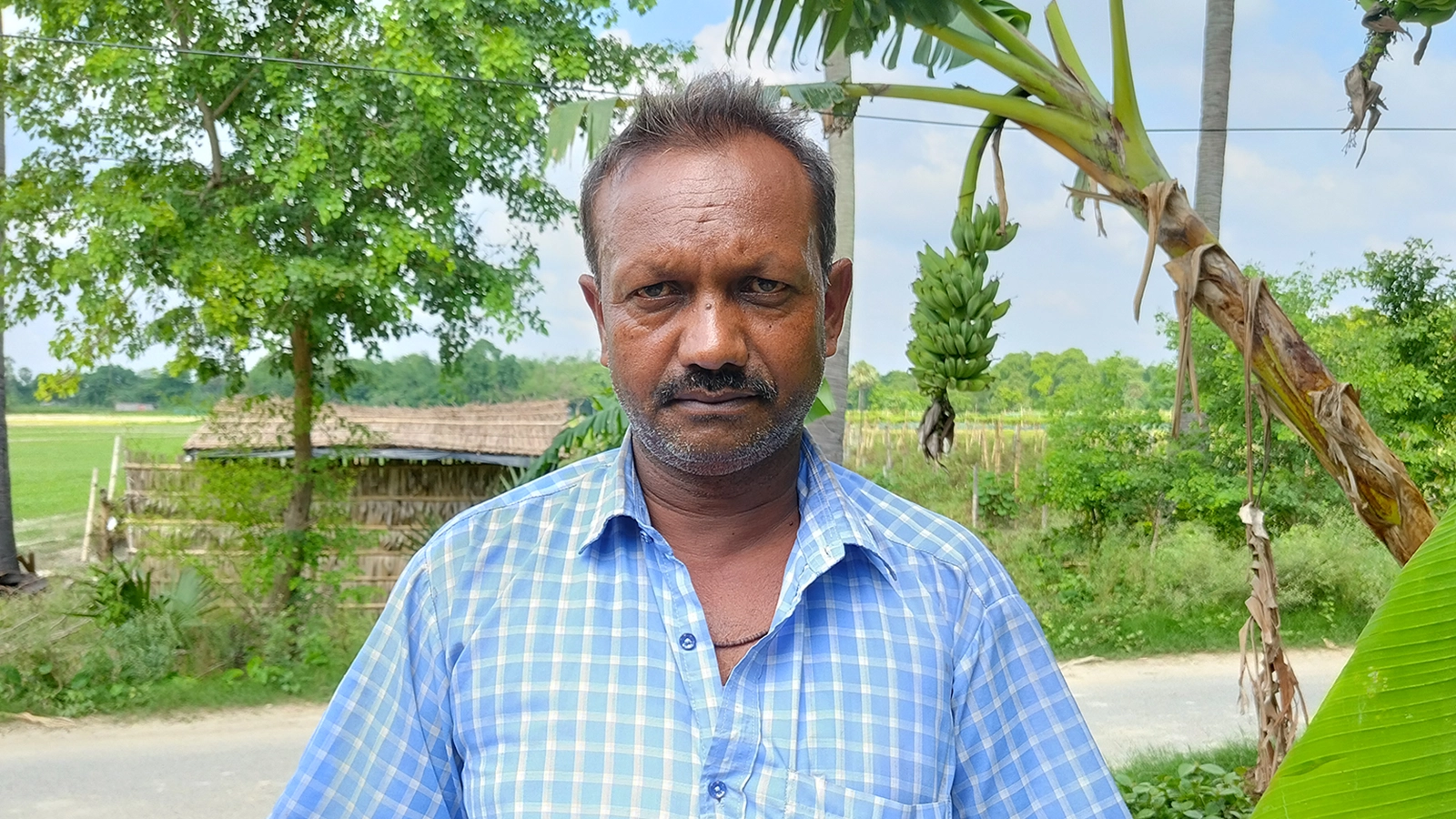
For more than twenty years, farming was the only work I knew. I own four acres of land in Gopalpur, Bihar, where I grow different crops throughout the year. Depending on the season, my fields have wheat, maize, potatoes, paddy, vegetables, and turmeric. Farming had always supported my family, and over the years, I had learned how to manage different crops through experience.
Like most farmers around me, I followed the methods I had grown up seeing. When there was a problem in the field, I would go to the local agricultural dealer and ask what to do. If there was a disease, a pest, or a problem with the crop, I followed the recommendations I was given and bought the products suggested to me.
The crops would grow, and we would earn from them, but the profits were limited. After all the expenses, my profitability was only around 40%. For years, I accepted that as part of farming.
Then, in 2019, something changed. An opportunity came for farmers in our village to take on a larger role in learning and sharing improved farming practices. I volunteered, and the people in my village elected me as a Lead Farmer.
At first, I saw it as an opportunity to learn something new. But I did not realise how much it would change the way I looked at my own land.
As part of the initiative, I received MITRA’s Package of Practices, or POP, training for different crops. Until then, I had thought that experience was the most important thing in farming. But during the training, I began to understand how much difference the right information could make.
I learned that different varieties of seeds required different practices. The duration of a crop mattered. The amount and timing of inputs mattered. I learned how to identify weeds and diseases instead of simply waiting for someone else to tell me what the problem was.
The training changed my perspective. Instead of depending on a dealer, I started observing my fields more carefully. I began applying the practices I had learned and making decisions based on the needs of the crop.
Slowly, I began seeing results. My crop yields improved, but that was not the only change. My expenses also came down. Earlier, I often spent money on inputs without being completely sure whether they were necessary. Now, with a better understanding of the crops and their requirements, I was able to manage my expenses more carefully. Better yields and lower expenses meant better profits. Once I saw the difference, I became more willing to try other improved practices.
One of the most successful changes for me was LR potato cultivation. I had grown potatoes before, but with this variety I got more yield than regular potato cultivation. Producing a better crop was important, but I also learned that growing a crop was only one part of the journey. But, getting a fair price for it mattered just as much.
When I began selling my produce through the MITRA Mandi. The mandi directly connected buyers and sellers and offered a guaranteed buyback at a good price.
As my income improved, I also began thinking beyond crop cultivation. The training had taught me that depending on only one source of income could be risky. I began thinking about how we could diversify our income.
My wife and I decided to explore indoor mushroom cultivation. We even built a new house that could accommodate the activity. At present, we are producing around 50 packets, but our plan is to increase production to 500 packets.
It is a new beginning for us, and we are still learning. But it has given us another source of income and another possibility for the future.
Over time, the changes began showing clearly in our family’s earnings. My annual net income increased from around ₹1 lakh to ₹2 lakh. For us, that was a major change.
With the additional income, we were also able to start a grocery store. My elder son now runs the shop, giving our family another source of livelihood outside the farm.
Today, when I look at my four acres of land, I see them differently from how I did a few years ago. For more than two decades, I believed that farming was mainly about experience and hard work. Both are important, and no farmer can succeed without them. But I have also learned that experience becomes more valuable when it is supported by the right knowledge.
The future I see now is different from the one I imagined when I was simply following the advice available to me.
Farming is still the centre of my life. But now, I know that learning does not stop after twenty years in the field.