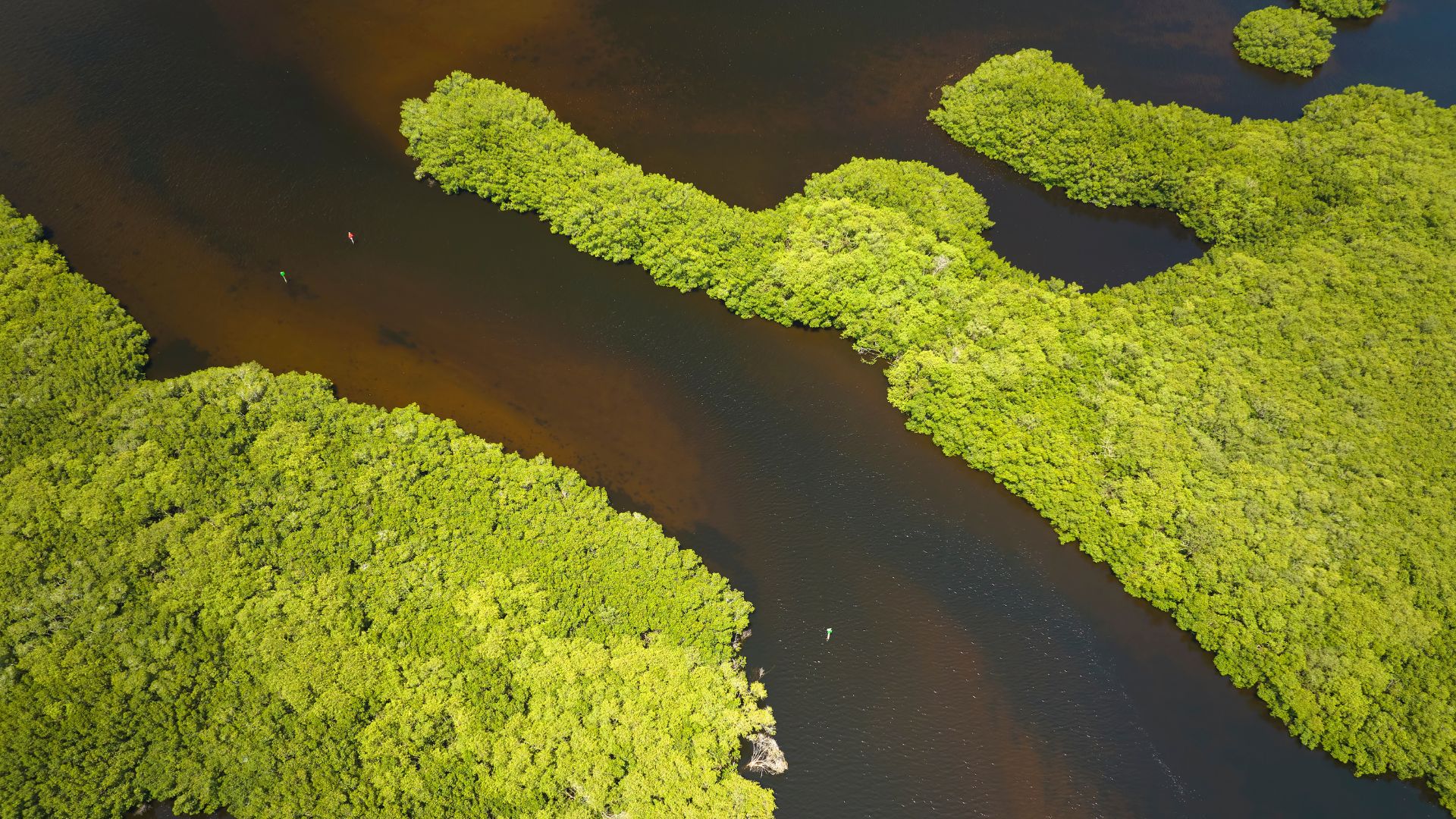
The blog offers a personal perspective from a marine biologist involved in the mangrove wetlands restoration initiative of Dr. Reddy’s Foundation in Tadatalav, Gujarat.
The blog also shares why mangroves matter for biodiversity, shoreline protection, and climate resilience, while reflecting on the technical and field realities of restoration work.
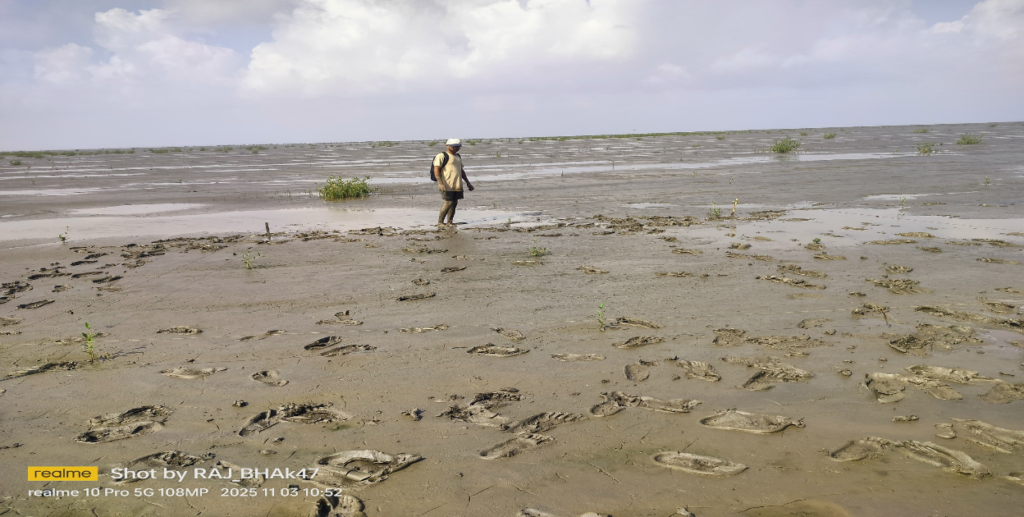
Mangrove restoration site at Tadatalav, Gujarat, highlighting the intertidal wetland ecosystem where restoration activities were undertaken.
Mangrove wetlands are among the most productive and ecologically significant coastal ecosystems in the world. They play a vital role in protecting shorelines from erosion, supporting rich marine biodiversity, and sustaining the livelihoods of coastal communities. Recognizing their critical importance, Dr. Reddy’s Foundation undertook a mangrove wetlands restoration initiative at Tadatalav, Gujarat, aimed at reviving degraded wetland areas and enhancing long-term coastal resilience.
As a marine biologist, I had the opportunity to be closely involved in this restoration effort, contributing technical expertise and field-based inputs while gaining invaluable hands-on experience in practical conservation.
Why Mangrove Wetlands Restoration Matters
Mangrove wetlands form a dynamic natural interface between land and sea, offering a wide range of ecological and environmental benefits. They act as natural barriers against coastal erosion and storm surges, provide vital breeding and nursery grounds for fish, crabs, prawns, and other marine organisms, and improve water quality by trapping sediments and pollutants. Additionally, mangroves are highly efficient blue carbon ecosystems, capable of storing large amounts of carbon and playing a significant role in climate change mitigation.
Despite these benefits, mangrove ecosystems continue to face degradation due to developmental pressures, habitat conversion, and limited awareness of their long-term ecological and economic value.
Technical Approach to Mangrove Wetlands Restoration
The restoration initiative at Tadatalav was guided by a science-based and sustainability-focused approach. Instead of limiting efforts to plantation alone, the project emphasized careful site assessment, appropriate species selection, sapling survival, and overall ecosystem recovery. By integrating technical planning with field implementation, the initiative aimed to ensure long-term restoration success rather than short-term plantation outcomes.
Technical Support and Field Involvement
As a marine biologist, I had the opportunity to provide comprehensive technical and on-ground support throughout this project. From assessing soil characteristics, tidal influences, and hydrological conditions to selecting appropriate species, facilitating sapling plantation, determining spacing, and conducting post-plantation monitoring, every stage contributed to my practical understanding of mangrove wetlands restoration. Beyond building technical expertise, this hands-on involvement fostered a deep personal connection with each sapling, strengthening my commitment to ensuring their survival.
During my college years, my understanding of mangrove wetlands was largely confined to theory, with limited exposure to real-world conservation practices. Active participation in this restoration initiative bridged that gap, transforming academic knowledge into lived experience and deepening my appreciation for wetland ecosystems.
This journey reaffirmed that mangrove wetlands restoration is a long-term commitment. Plantation is only the beginning. Consistent monitoring, maintenance, and sustained field engagement are equally critical to understanding ecosystem dynamics and achieving meaningful, lasting restoration outcomes.
To conclude, mangrove wetlands restoration is not merely a professional responsibility for me; it is a field of work I am deeply committed to. Active engagement in field activities, continuous monitoring of sapling growth, and observing ecosystem responses firsthand provide a strong sense of purpose and professional fulfilment. Each surviving mangrove sapling represents a meaningful step toward the recovery of a resilient and thriving coastal ecosystem.
The initiative at Tadatalav, Gujarat, by Dr. Reddy’s Foundation, demonstrates how scientific expertise, community engagement, and field-based implementation can come together to restore vital wetland ecosystems. Such collaborative efforts highlight the importance of moving beyond plantation numbers toward long-term ecological outcomes.
Protecting and advancing mangrove wetlands restoration today is not just environmental stewardship; it is an investment in coastal resilience, biodiversity conservation, and a sustainable future for generations to come.

The Evolution of Indian Sign Language: From Policy to Participation

English Reading: Building Literacy in India’s Public Schools