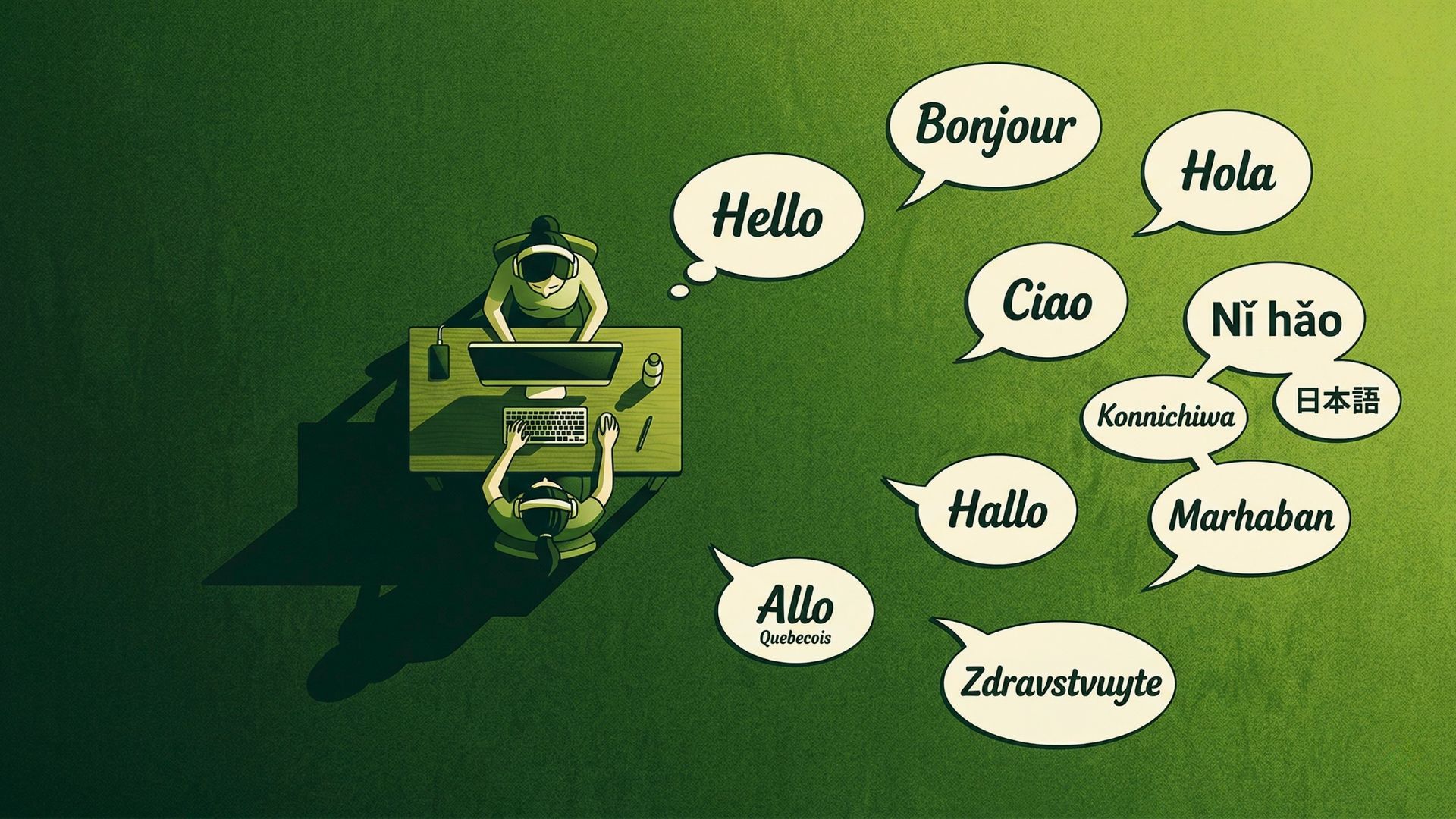
This blog explores why language access is central to inclusive edtech and why multilingual learning matters for real educational equity. It looks at how platforms can become more accessible, effective, and relevant when learners are able to learn in the language they know best.
We often describe the internet as a global space, but access to professional education remains limited by language. For many learners, the challenge is not a lack of ability or interest. It is the fact that most learning platforms continue to operate in one dominant language, while millions are more comfortable learning in another.
That gap is not small. It shapes who participates, who completes, and who benefits. At Dr. Reddy’s Foundation, this question led us to think more deeply about inclusive edtech. If education is meant to expand opportunity, then the design of education platforms must reflect the realities of the people they serve.
Why language matters
When learners are asked to study subjects like coding, management, or healthcare in a second or third language, the difficulty is not only academic. They are also spending mental effort interpreting the language itself before they can engage with the concept.
That extra effort slows learning and often affects confidence. In many cases, learners are not struggling with the subject. They are struggling with the language in which the subject is being delivered.
This is why inclusive edtech cannot be understood only in terms of devices, internet access, or interface design. Language is just as central to access. A platform becomes more useful when it helps learners engage with knowledge in a form that feels familiar, clear, and usable.
Inclusive EdTech needs more than translation
Accessibility in learning is often treated as a matter of subtitles, dubbing, or interface options. Those features help, but they do not fully address the issue.
A learner understands better when they can think through a concept in the language they use in everyday life. A creator teaches better when they can explain ideas without having to fit them into an unfamiliar linguistic frame.
That is the approach behind Skillfy. The platform was built not just as a self-learning and course creation ecosystem, but as a practical response to a real gap in inclusive edtech. The goal was simple. Make learning and teaching possible across languages, instead of expecting learners to adjust to one standard format.
Building access through multilingual learning
Skillfy was designed to support learning across 24 languages. This includes Indian languages as well as Sign Language. The idea was not only to host content in multiple languages, but to create a system where both creators and learners could participate with fewer barriers.
Creators can build and share knowledge in the language they know best. Learners can access courses in the language they are most comfortable with. This makes the learning process more direct and more natural.
In practice, this also widens both supply and access. More creators can contribute. More learners can stay engaged. The platform becomes more representative of the people it is meant to serve.
What the numbers show
The response to this model has been encouraging. In two years, and with very limited traditional outreach, Skillfy has grown steadily.
It has reached more than 1,47,000 registered learners, supported over 4 lakh course enrolments, and issued nearly 3 lakh certificates.
These are useful indicators, but the larger point is what they reflect. When language becomes less of a barrier, participation increases. Learners are more likely to start, continue, and complete courses when the platform speaks to them in a way they can immediately connect with.
That is one of the clearest lessons for inclusive edtech. Inclusion is not only a social value. It also improves learning outcomes and expands reach.
The future of Inclusive EdTech must be multilingual
There is still a tendency in digital education to treat multilingual access as an added feature. It should be seen as a core design principle.
Talent is widely distributed, but access to learning is not. If platforms are serious about equity and scale, they need to account for language from the beginning. That is especially true in countries like India, where the diversity of language is tied closely to the diversity of learners themselves.
For us, Skillfy is one attempt to move in that direction. It reflects a simple belief that edtech becomes stronger when people can learn, teach, and grow in the language that works best for them