
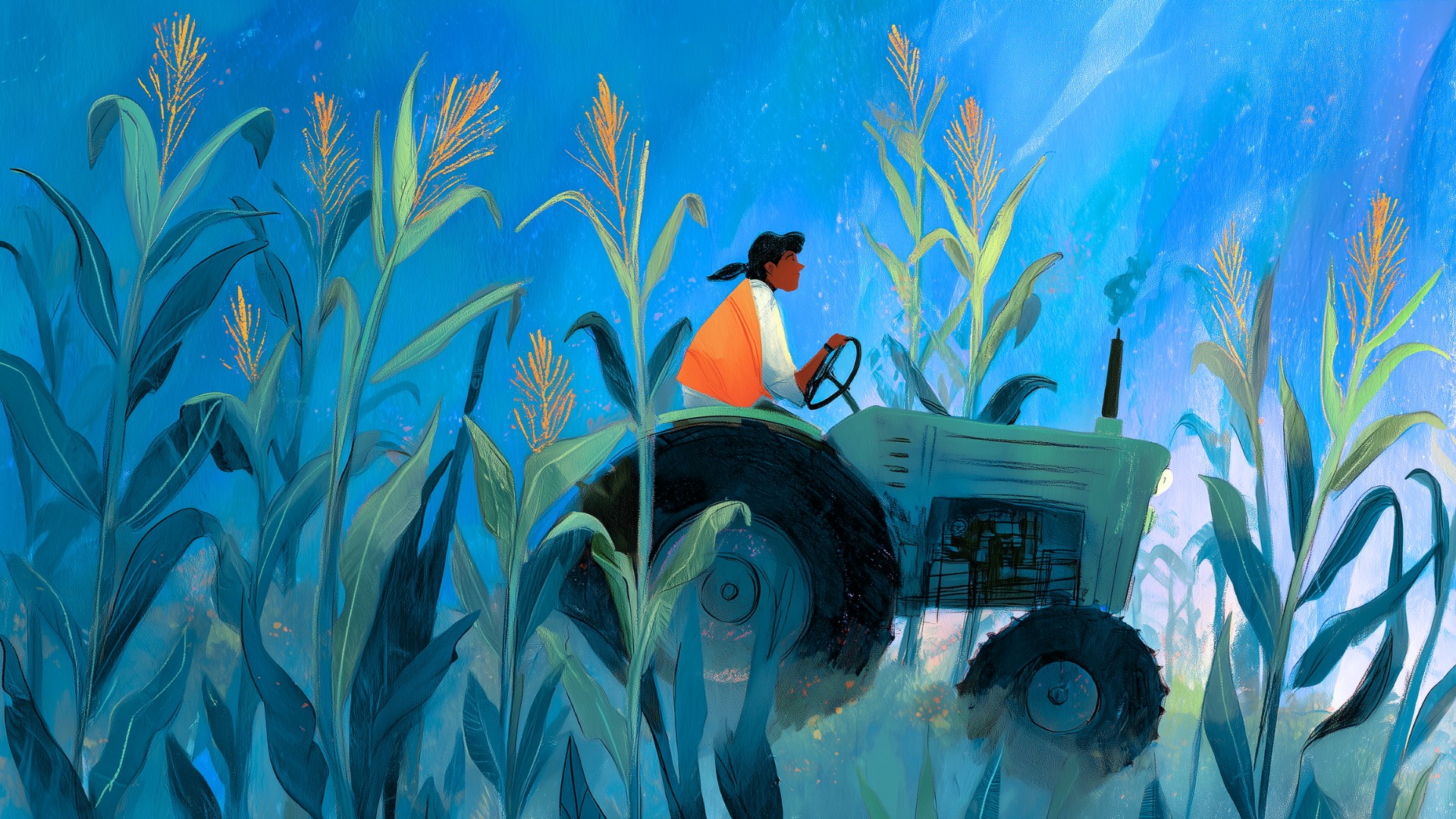
Improving the Well-being of Small and Marginal Farmers - Regenerative Agriculture Strategy (2026-2030)
In response to the escalating challenges facing India’s small and marginal farmers, including climate variability, soil degradation, water scarcity, rising input costs, and income instability, and in alignment with national climate commitments and the Sustainable Development Goals, DRF has developed its Regenerative Agriculture Strategy for 2026-2030. This strategy serves as a guiding framework for its flagship MITRA (Making Integrated Transformation through Regenerative Agriculture) program, centering the well-being of smallholder farmers through a co-benefit model that boosts farm incomes while reducing greenhouse gas emissions.
DRF acknowledges the breadth and complexity of challenges facing India’s agricultural sector. Based on over two decades of ground-level experience and action research, we have chosen to focus our efforts on six integrated strategic components – (a) Agriculture and Water Practices to restore soil health, improve water-use efficiency, and reduce emissions through regenerative agronomic methods, (b) Surplus Biomass Utilization to transform crop residues into bioenergy and soil amendments through decentralized circular value chains, (c) Farm Mechanisation with a focus on affordable, women-friendly, and small-farm-appropriate tools, (d) Non-Farm Livelihoods including integrated crop-livestock systems and mushroom cultivation to diversify and stabilize household incomes, (e) Livestock Management to improve fodder quality, dairy productivity, and reduce methane emissions, and (f) an Agriculture Skill Academy to build farmer capacity, bridge the lab-to-land gap, and establish agriculture as a modern, technology-driven profession.
In the strategy paper, we have deep-dived into the following areas: (a) Our Work and Story of Impact in Regenerative Agriculture, (b) Current Challenges facing Small and Marginal Farmers, (c) Opportunities in Regenerative Agriculture, (d) The Role of Regenerative Agriculture in Improving Farmer Well-being, (e) DRF’s Regenerative Agriculture Strategy and Guiding Principles, (f) Strategic Principles, Priorities and Components, (g) Contribution to the Broader Ecosystem, (h) Building Partnerships, and (i) Envisioned Impact.
To know more, please download our Regenerative Agriculture Strategy Paper.